

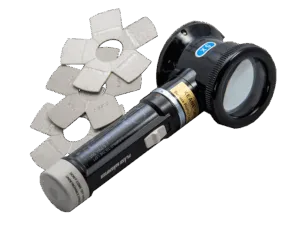
Blotter Paper
$44.95
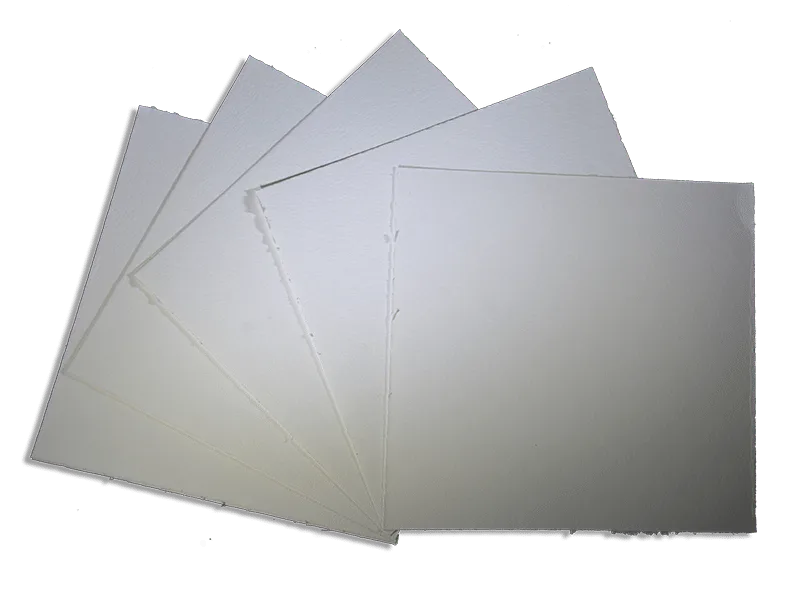
This package of 60 pre-cut 6″ x 6″ pieces of blotter paper is used to verify compressed air cleanliness.
In stock (can be backordered)
Blotter Paper Pack
This package of 60 pre-cut 6″ x 6″ pieces of blotter paper is used to verify compressed air cleanliness. The SSPC/NACE joint standards for abrasive blast cleaning invoke a requirement to verify the cleanliness of compressed air prior to abrasive blast cleaning or other operations where contaminated compressed air can adversely impact coating performance. Simply attach a piece to a rigid backing using tape and perform the test according to ASTM D 4285. The blotter paper can be marked with the date and time of test and retained for documentation as necessary. Made in the USA.
| Weight | 0.95 lbs |
|---|---|
| Dimensions | 6.5 × 6.5 × 1.5 in |
| Brand | KTA Tator |
You may also like…


Related products
Dial Depth Pit Gauge
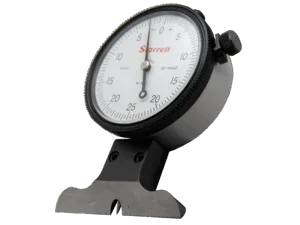
This precision gauge measures the depth of pits up to 125 mils (0.5 mil increments). The 2.5" x 3.75" gauge is designed with an elongated knife edge stabilizer and a cut-out for positioning the pinpoint stylus directly over the pit for optimum measurements. Gauge comes complete with case, instructions and manufacturer's Certificate of Accuracy.
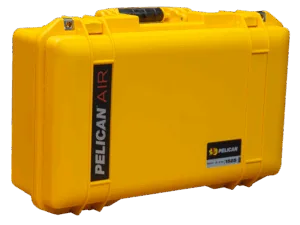
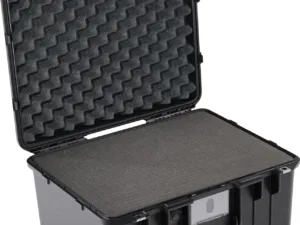
Pelican 1557 Air Case
Discover the cutting-edge Pelican 1557 Air cases, a pinnacle of innovation from the protective case pioneers. Up to 40% lighter, waterproof, crushproof, and dustproof, these cases feature Press and Pull™ Latches, user-customizable Pick N Pluck™ foam, a fold-down over-molded handle, and a waterproof O-ring seal
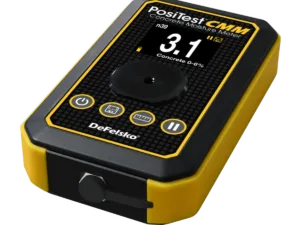
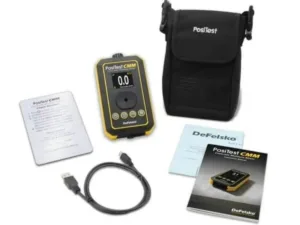
PosiTest® CMM
Concrete Moisture Meter non-destructively measures the moisture content of concrete in accordance with ASTM F2659
The PosiTest CMM Concrete Moisture Meter is the fast, non-destructive impedance meter ideal for inspectors looking to quickly evaluate the moisture condition in concrete slabs.